PARAMETRIC wind INSURANCE

Your client is hit by winds, not by a category.

Most parametric hurricane triggers pay based on storm category and where its centre crosses a polygon. Neither tells you what wind speed your client's location actually experienced. That's where payouts disconnect from damage, and where renewal conversations break down.


Trusted by the world's top risk professionals

Trusted by the world's top risk professionals

THE CHALLENGE

Fourweeksbeforerenewal

You sit down with the client to walk them through their parametric cover. The conversation goes the way it always does. The client follows your argument. They nod agreeably.


Two weeks later, the email comes. Polite. They've increased their traditional limit at renewal. They won't need a parametric layer this year.

Not a rejection. Another exit. The hit rate is brutal.

THE PROXY GAP

What the trigger measures ≠ what the location experienced 

Every parametric hurricane trigger on the market measures a proxy: distance from the track, a sensor somewhere else, a reconstruction from stations that may not have survived. None of them measure what your client's location actually experienced. At Reask, we call it the proxy gap.

Cat-in-a-Circle

Measures whether the storm centre crosses a boundary — not what wind your location experienced. A direct hit can miss the trigger. A distant storm can fire it.

Cat-in-a-Shape

A polygon instead of a circle doesn't close the proxy gap. The trigger still measures storm geometry, not conditions at the insured location.

Simplified wind-field models

Mathematically a moving Cat-in-a-Circle with finer payout steps. Terrain doesn't exist. A hotel behind a hill gets the same number as one in front of it.

Physical anemometers

Sensors fail during extreme events — exactly when the measurement matters. The proxy gap isn't eliminated. It's relocated to a fragile instrument somewhere else.

Observation-based reconstruction

Inheriting every limitation of anemometers. Historical footprints are not based of today's station network. Back-testing payouts is inconsistent. Expert judgement enters where objectivity is needed most.


THE SOLUTION

Wind speed at the location.
Not a proxy. 

Metryc is a parametric trigger based on modelled wind speed at the insured location. It starts with the same NHC, JTWC, JMA and BOM track data the rest of the market uses. From there, it samples uncertain wind-field parameters, runs 100 physically grounded simulations of every storm, applies a terrain correction at 1 km resolution, and returns the most probable wind speed at your specific location.

LOCATION-LEVEL PRECISION

That hill between two hotels? CIC and Holland can't see it. Metryc can.

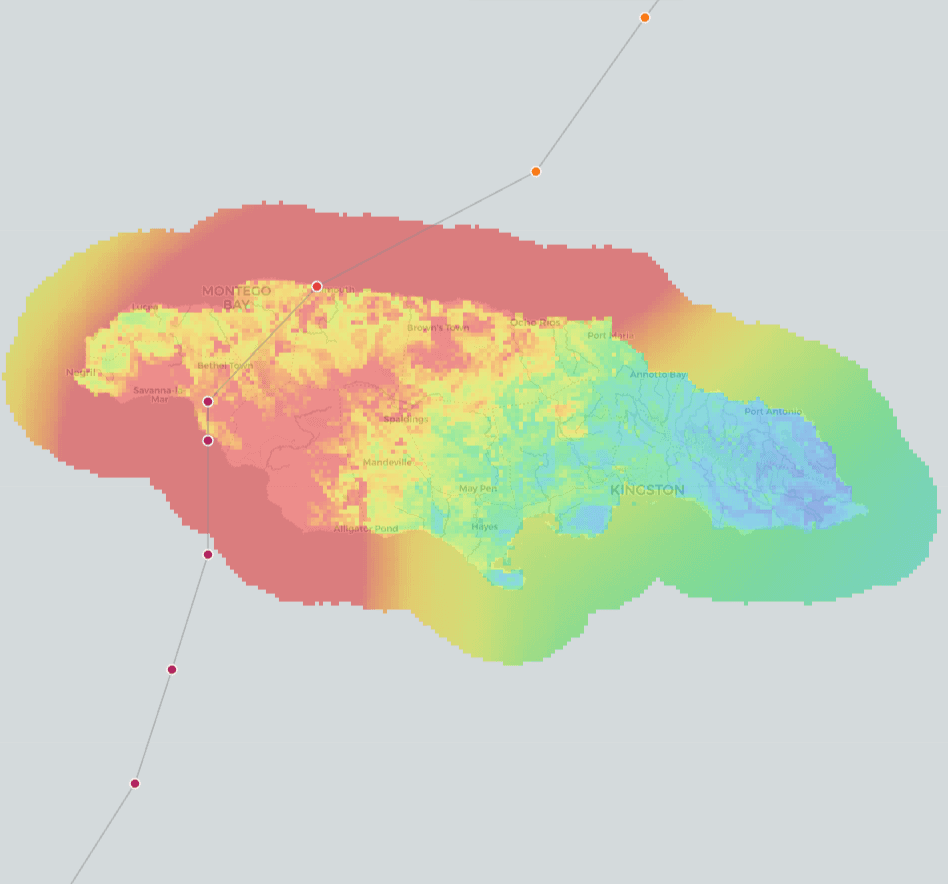
Two hotels on opposite sides of a Caribbean island. A Category 5 hurricane makes landfall. One, fully exposed to the eyewall, takes devastating winds. The other, sheltered by a hill, experiences Category 2 conditions. Same storm. Same category. Same island. Metryc captures the asymmetry of the wind field and how wind interacts with terrain so the payout directly aligns with what your location actually experienced.

Asymmetric wind fields

Terrain and topography modelled at the location

Every landfalling tropical cyclone globally back to 1945, modelled with the same methodology, consistent back-testing, no gaps

Metryc wind field map showing asymmetric wind speed distribution across a Caribbean island during a Category 4 hurricane landfall

LOCATION-LEVEL PRECISION

That hill between two hotels? CIC and Holland can't see it. Metryc can.

Two hotels on opposite sides of a Caribbean island. A Category 5 hurricane makes landfall. One, fully exposed to the eyewall, takes devastating winds. The other, sheltered by a hill, experiences Category 2 conditions. Same storm. Same category. Same island. Metryc captures the asymmetry of the wind field and how wind interacts with terrain so the payout directly aligns with what your location actually experienced.

Asymmetric wind fields

Terrain and topography modelled at the location

Every landfalling tropical cyclone globally back to 1945, modelled with the same methodology, consistent back-testing, no gaps

Metryc wind field map showing asymmetric wind speed distribution across a Caribbean island during a Category 4 hurricane landfall

LiveCyc Scenarios

That hill between two hotels? CIC and Holland can't see it. Metryc can.

Two hotels on opposite sides of a Caribbean island. A Category 5 hurricane makes landfall. One, fully exposed to the eyewall, takes devastating winds. The other, sheltered by a hill, experiences Category 2 conditions. Same storm. Same category. Same island. Metryc captures the asymmetry of the wind field and how wind interacts with terrain so the payout directly aligns with what your location actually experienced.

Asymmetric wind fields

Terrain and topography modelled at the location

Every landfalling tropical cyclone globally back to 1945, modelled with the same methodology, consistent back-testing, no gaps

Metryc wind field map showing asymmetric wind speed distribution across a Caribbean island during a Category 4 hurricane landfall
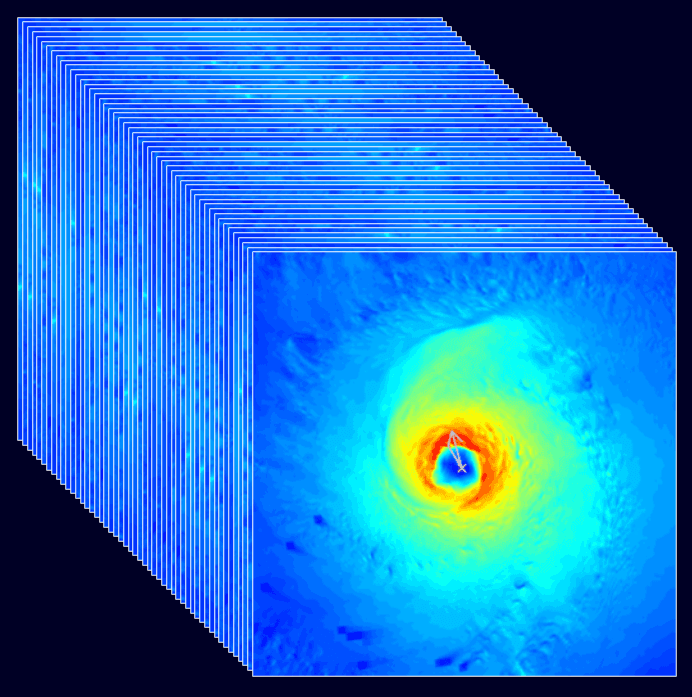
Stacked wind field layers representing 100 physically-grounded Metryc simulations of a single tropical cyclone event, illustrating explicit uncertainty modelling

Uncertainty made explicit

The only trigger that tells you what it doesn't know.

Every other parametric trigger gives you one answer and asks you to trust it. Metryc runs 100 simulations of every storm, varying the parameters that matter, and delivers the 50th percentile as the most probable wind speed. Where simulations cluster, confidence is high. Where they spread, Metryc says so. In a market where every vendor claims accuracy, explicitly modelling uncertainty is the most credible position available.

100 physically-grounded simulations per storm

50th percentile delivered as the contractual trigger value

Pricing-payout consistency: same wind-field methodology used to price the cover (DeepCyc) and to fire the trigger (Metryc)

Stacked wind field layers representing 100 physically-grounded Metryc simulations of a single tropical cyclone event, illustrating explicit uncertainty modelling

Uncertainty made explicit

The only trigger that tells you what it doesn't know.

Every other parametric trigger gives you one answer and asks you to trust it. Metryc runs 100 simulations of every storm, varying the parameters that matter, and delivers the 50th percentile as the most probable wind speed. Where simulations cluster, confidence is high. Where they spread, Metryc says so. In a market where every vendor claims accuracy, explicitly modelling uncertainty is the most credible position available.

100 physically-grounded simulations per storm

50th percentile delivered as the contractual trigger value

Pricing-payout consistency: same wind-field methodology used to price the cover (DeepCyc) and to fire the trigger (Metryc)

Stacked wind field layers representing 100 physically-grounded Metryc simulations of a single tropical cyclone event, illustrating explicit uncertainty modelling

Uncertainty made explicit

The only trigger that tells you what it doesn't know.

Every other parametric trigger gives you one answer and asks you to trust it. Metryc runs 100 simulations of every storm, varying the parameters that matter, and delivers the 50th percentile as the most probable wind speed. Where simulations cluster, confidence is high. Where they spread, Metryc says so. In a market where every vendor claims accuracy, explicitly modelling uncertainty is the most credible position available.

100 physically-grounded simulations per storm

50th percentile delivered as the contractual trigger value

Pricing-payout consistency: same wind-field methodology used to price the cover (DeepCyc) and to fire the trigger (Metryc)

After the storm, everything changes.

For the broker. For the insured. For the renewal conversation.

Payouts that follow the damage

A discussion about risk, not geometry

You only pay for the 1 km² that matters

Built to survive renewal

CASE STUDy

Seeing the risk others miss

How parametric buyers are closing the proxy gap.

Tropical cyclone making landfall on a Pacific island, illustrating the extreme wind and flooding risk underpinning PCRIC's parametric insurance trigger

CALCULATION AGENT

Redesigning PCRIC's tropical cyclone product with Reask, WTW, and the World Bank Group

Discover how PCRIC uses our hazard data to build a population impact trigger.

Tropical cyclone making landfall on a Pacific island, illustrating the extreme wind and flooding risk underpinning PCRIC's parametric insurance trigger

CALCULATION AGENT

Redesigning PCRIC's tropical cyclone product with Reask, WTW, and the World Bank Group

  • Swiss Re logo

    "Reask’s tropical cyclone wind data has quickly become a trusted cornerstone in Swiss Re Corporate Solutions’ ability to offer effective parametric insurance covers across the globe. Reask's deep expertise, speed of response, and willingness to engage in transparent discussions has consistently set them apart as a reliable partner.” 

    Martin Hotz, Head Parametric Nat Cat, Swiss Re Corporate Solutions

    Martin Hotz

    Head Parametric Nat Cat, Swiss Re Corporate Solutions

  • Descartes logo

    “Data dearth in certain regions remains a gating factor to providing parametric insurance covers that enhance resilience. Reask leads the charge in its ability to quickly capture a windstorm event or provide wind at location maps in certain areas, such as the South Pacific, where data is less accessible."

    Kevin Dedieu, Co-founder & Head of R&D at Descartes Underwriting

    Kevin Dedieu

    Co-founder & Head of R&D at Descartes Underwriting

  • Pacific Catastrophe Risk Insurance Company logo

    "Reask has helped PCRIC with structuring and pricing parametric insurance policies offered to Pacific Island Countries (PICs). Reask has also played a central role in calculating insurance payouts due to Pacific beneficiaries, within ten days after an event. This has allowed PCRIC to make rapid cash transfers and support response and recovery efforts in the immediate aftermath of a disaster."

    Dr. Nicolas Pondard, Strategic Advisor to the Pacific Catastrophe Risk Insurance Company (PCRIC)

    Dr. Nicolas Pondard

    Strategic Advisor to the Pacific Catastrophe Risk Insurance Company (PCRIC)

  • AXA Climate logo

    “Choosing Reask as our partner was a strategic decision driven by their ability to deliver quality, high-resolution data on a global scale. Their approach to probabilistic modelling empowers us to calibrate and structure parametric contracts with precision, ultimately benefiting our clients with faster and more accurate risk transfer solutions.” 

    Regine Mollenhauer, Chief Underwriting Officer at AXA Climate

    Regine Mollenhauer

    Chief Underwriting Officer at AXA Climate

  • Altitude logo

    "A standout innovation is our double trigger solution, combining the well-established tropical cyclone “cat-in-the-circle” wind methodology with rainfall data from Reask’s Metryc footprint. This dual trigger captures the full impact of tropical cyclones, reducing mismatches between payouts and actual losses. The result is a product that is highly cost-efficient, precisely tailored to the client’s needs, and designed to minimise basis risk while maximising impact."

    Marco Carrara, Head of Parametric, SRS Altitude

    Marco Carrara

    Head of Parametric, SRS Altitude

  • Swiss Re logo

    "Reask’s tropical cyclone wind data has quickly become a trusted cornerstone in Swiss Re Corporate Solutions’ ability to offer effective parametric insurance covers across the globe. Reask's deep expertise, speed of response, and willingness to engage in transparent discussions has consistently set them apart as a reliable partner.” 

    Martin Hotz, Head Parametric Nat Cat, Swiss Re Corporate Solutions

    Martin Hotz

    Head Parametric Nat Cat, Swiss Re Corporate Solutions

  • Descartes logo

    “Data dearth in certain regions remains a gating factor to providing parametric insurance covers that enhance resilience. Reask leads the charge in its ability to quickly capture a windstorm event or provide wind at location maps in certain areas, such as the South Pacific, where data is less accessible."

    Kevin Dedieu, Co-founder & Head of R&D at Descartes Underwriting

    Kevin Dedieu

    Co-founder & Head of R&D at Descartes Underwriting

  • Pacific Catastrophe Risk Insurance Company logo

    "Reask has helped PCRIC with structuring and pricing parametric insurance policies offered to Pacific Island Countries (PICs). Reask has also played a central role in calculating insurance payouts due to Pacific beneficiaries, within ten days after an event. This has allowed PCRIC to make rapid cash transfers and support response and recovery efforts in the immediate aftermath of a disaster."

    Dr. Nicolas Pondard, Strategic Advisor to the Pacific Catastrophe Risk Insurance Company (PCRIC)

    Dr. Nicolas Pondard

    Strategic Advisor to the Pacific Catastrophe Risk Insurance Company (PCRIC)

  • AXA Climate logo

    “Choosing Reask as our partner was a strategic decision driven by their ability to deliver quality, high-resolution data on a global scale. Their approach to probabilistic modelling empowers us to calibrate and structure parametric contracts with precision, ultimately benefiting our clients with faster and more accurate risk transfer solutions.” 

    Regine Mollenhauer, Chief Underwriting Officer at AXA Climate

    Regine Mollenhauer

    Chief Underwriting Officer at AXA Climate

  • Altitude logo

    "A standout innovation is our double trigger solution, combining the well-established tropical cyclone “cat-in-the-circle” wind methodology with rainfall data from Reask’s Metryc footprint. This dual trigger captures the full impact of tropical cyclones, reducing mismatches between payouts and actual losses. The result is a product that is highly cost-efficient, precisely tailored to the client’s needs, and designed to minimise basis risk while maximising impact."

    Marco Carrara, Head of Parametric, SRS Altitude

    Marco Carrara

    Head of Parametric, SRS Altitude

See what Metryc returns for your locations

Bring your locations. We'll run the numbers.

See what Metryc returns for your locations

Bring your locations. We'll run the numbers.

Stay in the loop

Sign up for the Reask newsletter for the latest climate science, model updates, and industry insights *

* By subscribing, you agree to receive the Reask newsletter. You can unsubscribe at any time. For more details, see our Privacy Policy.

2026 © Reask

All rights reserved

Stay in the loop

Sign up for the Reask newsletter for the latest climate science, model updates, and industry insights *

* By subscribing, you agree to receive the Reask newsletter. You can unsubscribe at any time. For more details, see our Privacy Policy.

2026 © Reask

All rights reserved

Stay in the loop

Sign up for the Reask newsletter for the latest climate science, model updates, and industry insights *

* By subscribing, you agree to receive the Reask newsletter. You can unsubscribe at any time. For more details, see our Privacy Policy.

2026 © Reask

All rights reserved