The newsletter for climate-aware risk professionals.
The climate producing today's storms is not the climate that produced the historical record. Join 400+ risk professionals receiving the latest insights from Reask direct to their inbox.

Insights
European wildfire is no longer a peripheral peril. Is your view of risk keeping up?
Why the Aude fire wasn't an anomaly and what a climate-driven wildfire model shows about Europe's growing exposure.

Frédéric Azemar
Natural Hazards Cat Modeler
More extremes, more record-breaking fire seasons
In August 2025, a wildfire tore through the Aude region of southern France. 17,000 hectares burned in 48 hours.
Fueled by an accumulation of dead and dry vegetation and extreme fire weather conditions, the event exhibited behavior that fire risk professionals now associate with a different era of climate: rapid spread, pyroconvection, and the kind of intensity that makes suppression nearly impossible in its peak.
During the same year, significant wildfires broke out near Marseille and Madrid, and the UK experienced its highest activity on record by far.
Historically, wildfires in Europe have affected the Mediterranean basin, prominently over the summer months. For decades, landscape management and suppression capacities have proven effective in containing risk and in limiting impacts on life and the economy. As a result, wildfire has been treated as peripheral by the (re)insurance industry.
But over the last decade, Southern Europe has experienced longer fire seasons with a sharp increase in extreme and catastrophic events. An increase in wildfire activity in Northern Europe has also been observed.
A changing climate, land abandonment, and the expansion of wildland urban interface areas are some of the key factors making wildfire riskier today.
European wildfire has become a core NatCat peril
At the Munich Re Wildfire Roundtable in April 2026, Chief Climate Scientist Tobias Grimm stated it plainly: wildfire is now an established NatCat peril in Europe. The frequency, intensity, and spatial spread of events have changed. Climate change is accelerating risk in regions not traditionally affected. And Europe faces a significant insurance protection gap as a result.
The market is beginning to price this shift. The question for cat modelers and portfolio risk managers is whether their models have priced it too.
A climate-driven wildfire stochastic catalog
Reask's European Wildfire model is a climate-driven stochastic event catalog: 50,000 synthetic years of fire activity across the continent, built to reflect the conditions driving wildfire risk today, not the loss history of the past decades.
The model works in three layers, in a top-down approach.
Wildfire activity
For each stochastic year, annual burnt area is generated from dominant climate patterns at continental and subcontinental scale.
Following dimensionality reduction across key climate variables and multiple time windows, historical yearly burnt area is correlated with the main modes of climate variability. These correlations are used to parametrize statistical distributions from which stochastic yearly burnt areas are sampled.
Ignition probability and event sampling
Yearly ignition probability maps are built by leveraging machine learning algorithms and a selection of predictors across 50+ climate, vegetation, anthropogenic activity, and terrain variables.
A Dry Lightning Risk Index (DLRI), based on CAPE, topography, and the Fire Weather Index, captures the likelihood of lightning-ignited fires. An event generation engine creates stochastic events by sampling from these ignition maps.
Propagation
For each stochastic event, a unique footprint is simulated with a raster-based propagation model based on the Scott and Burgan fuel system.
Fuel data is enhanced with high-resolution geographical features. Each event is classified to estimate probable fire behavior, likelihood of road crossing, and propagation over the wildland urban interface or ember generation: all the mechanisms that drive catastrophic spread.
The result is a stochastic catalog of 25 million unique event footprints across Europe, delivered via API or geospatial files, supporting risk scores, and that can be integrated in a catastrophe modeling loss framework.
2025 fire season and model validation
Reask’s European Wildfire Model was completed in early 2025. The 2025 fire season was the first out of sample validation post model release. It was also one of the most extreme seasons of the decade.
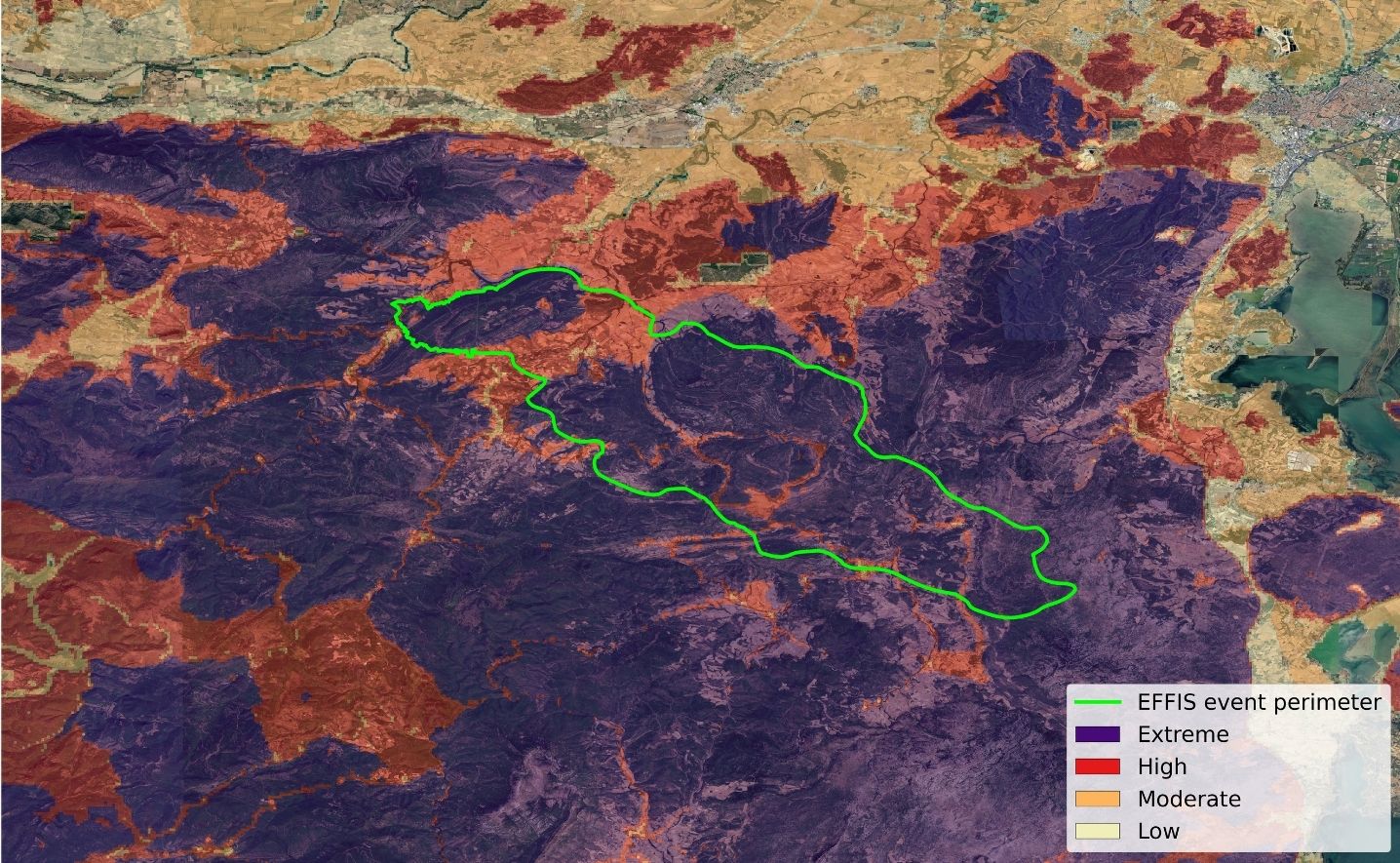
When we compare the Aude fire's extent to our return period hazard maps (Figure 1), the affected area fell within the highest-risk zones in our model.
Figure 1: 2025, Aude - Reask Hazard Index vs. EFFIS observed perimeter
Marseille (Figure 2) and Madrid (Figure 3) events occurred near densely populated areas in the wildland urban interface, areas also considered as high to moderate risk in our model:
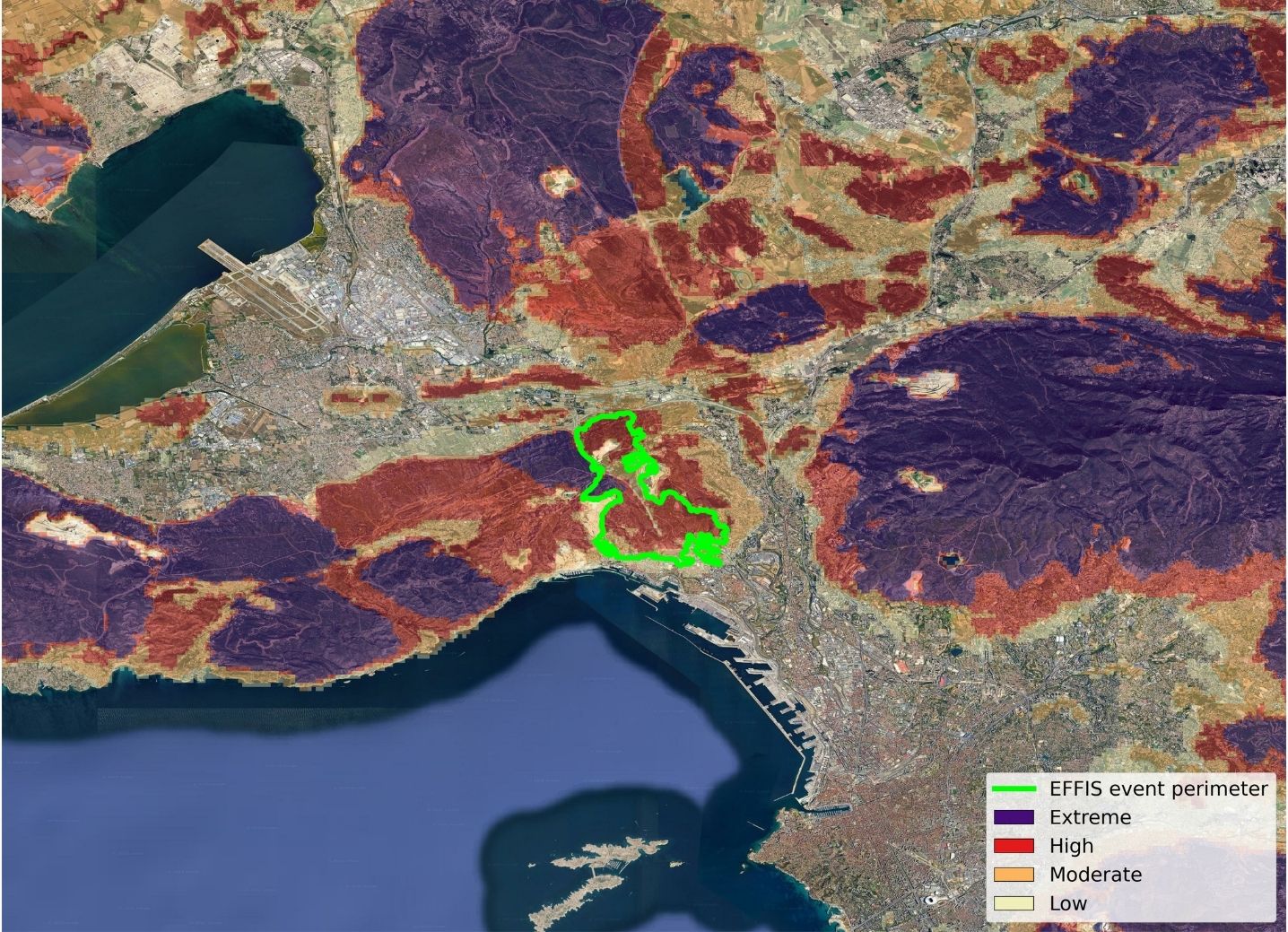
Figure 2: 2025, Marseille - Reask Hazard Index vs. EFFIS observed perimeter
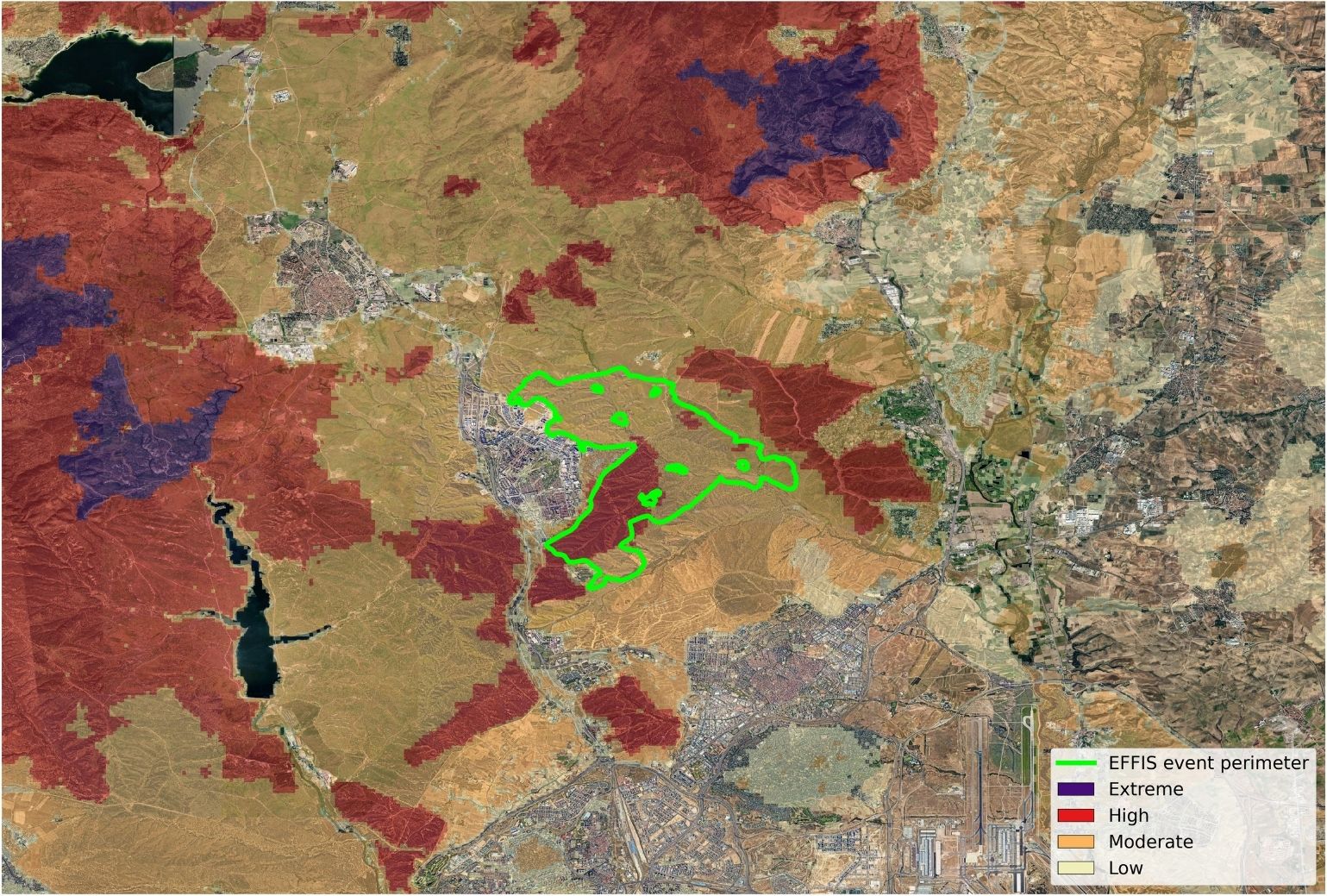
Figure 3: 2025, Madrid - Reask Hazard Index vs. EFFIS observed perimeter
With such events, the 2025 fire season has allowed for timely validation examples. A comparison against events the model had no prior knowledge of, in a region, in a season, and under conditions that the model had been built to anticipate from climate signals rather than historical loss frequency.
We also presented this work at the EGU General Assembly, alongside co-authors from NCAR and AXA GIE Paris.
The methodology and its application to portfolio exposure accumulation in France, where approximately 20% of insured properties are exposed to wildfire, with around 12.5% exposed to potentially extreme events, are documented in our published poster.
What this means for your portfolio
The 2025 fires burned through some of the highest-risk zones in our hazard maps. It was not an anomaly. It was a signal.
If you'd like to understand how Reask's European Wildfire model could inform your view of this risk for accumulation analysis, portfolio stress testing or pricing, get in touch with our team at contact@reask.earth.