A CLIMATE VIEW OF RISK
Does your tropical cyclone cat model know it's 2026?
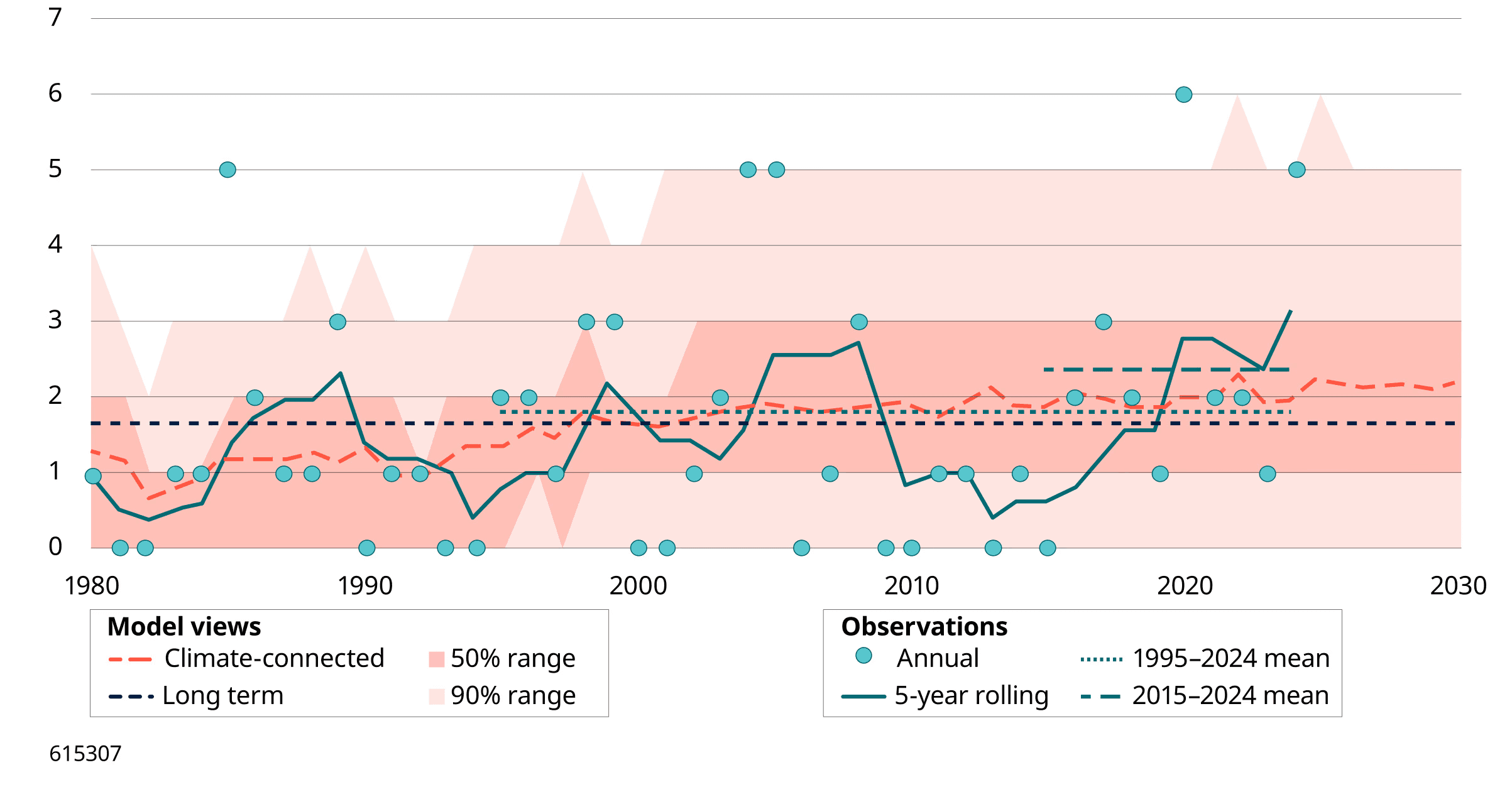
You know the climate that produced the historical record is not the climate producing today's storms. The nervousness comes from not being able to defend that in the numbers.
A CLIMATE VIEW OF RISK
Does your tropical cyclone cat model know it's 2026?
You know the climate that produced the historical record is not the climate producing today's storms. The nervousness comes from not being able to defend that in the numbers.
A CLIMATE VIEW OF RISK
Does your tropical cyclone cat model know it's 2026?
You know the climate that produced the historical record is not the climate producing today's storms. The nervousness comes from not being able to defend that in the numbers.
Trusted by industry leaders









Trusted by industry leaders
The model is doing exactly what it was designed to do. That's the problem.
When the question comes — are we managing risk to where we've been, or where we're going? — are you answering with confidence? Or with the quiet knowledge that the climate has changed, but that change isn't defensibly reflected in your numbers?
The gap was built in from the start.
Cat modelling has evolved through three generations. The second generation still dominates, and it has a constraint it was never designed to fix.
First generation: Statistical
Take historical storms, shift them around to generate plausible alternatives. The universe of possible outcomes is bounded by what actually happened.

First generation: Statistical
Take historical storms, shift them around to generate plausible alternatives. The universe of possible outcomes is bounded by what actually happened.

Second generation: Beyond history
Build distributions that extrapolate to events possible but never observed. Better tracks, higher resolution, richer vulnerability curves. The industry standard for three decades, but built for a stable climate.

Second generation: Beyond history
Build distributions that extrapolate to events possible but never observed. Better tracks, higher resolution, richer vulnerability curves. The industry standard for three decades, but built for a stable climate.


What makes DeepCyc different
AI-driven probabilistic hazard simulation
DeepCyc uses a combination of ERA5 reanalysis data and NCAR-CESM ensemble members to simulate event characteristics beyond the limits of the historical record.
This allows DeepCyc to produce consistent stochastic catalogues of up to 100,000 years, providing insurers, reinsurers, and risk modellers with a robust view of hazard frequency and intensity, even in regions with limited observation data.
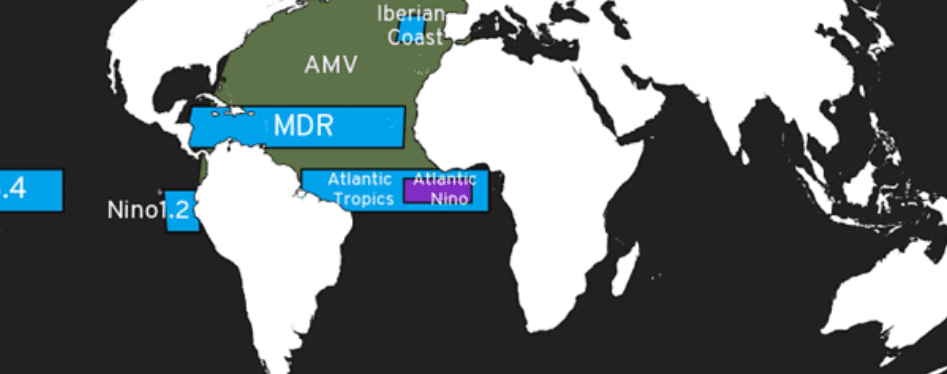
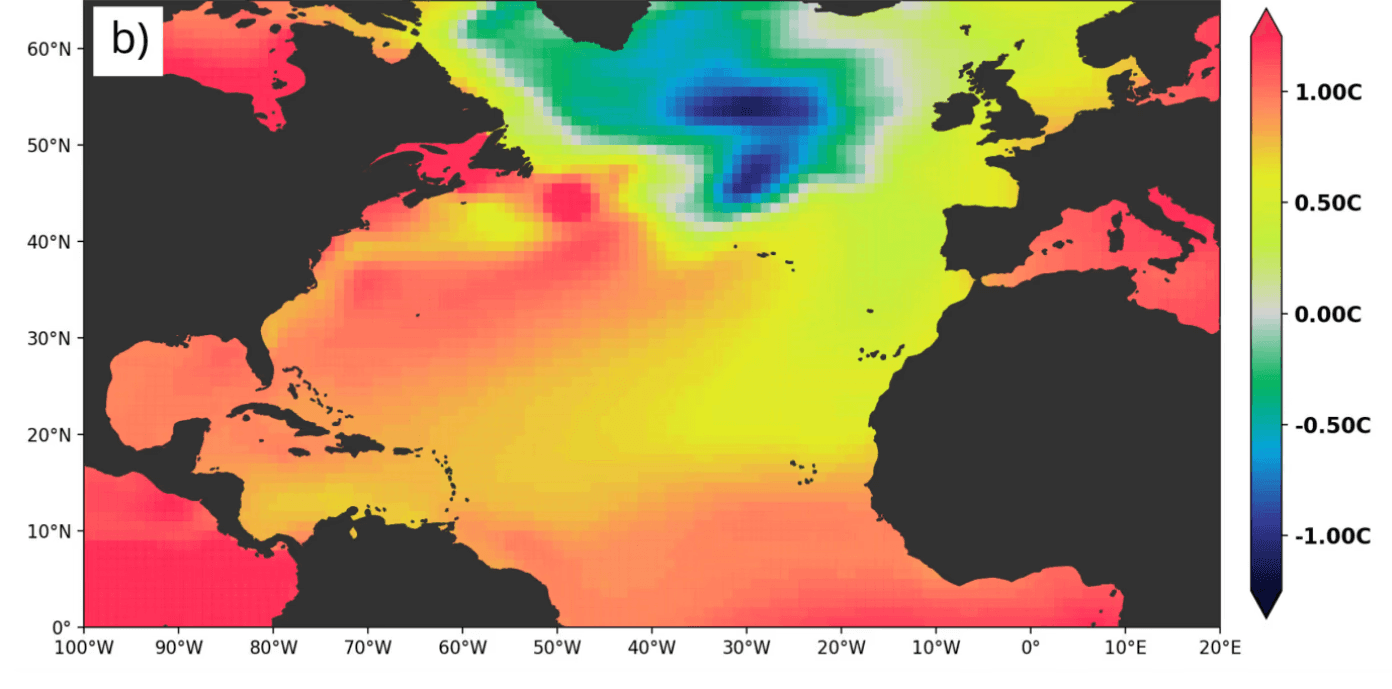
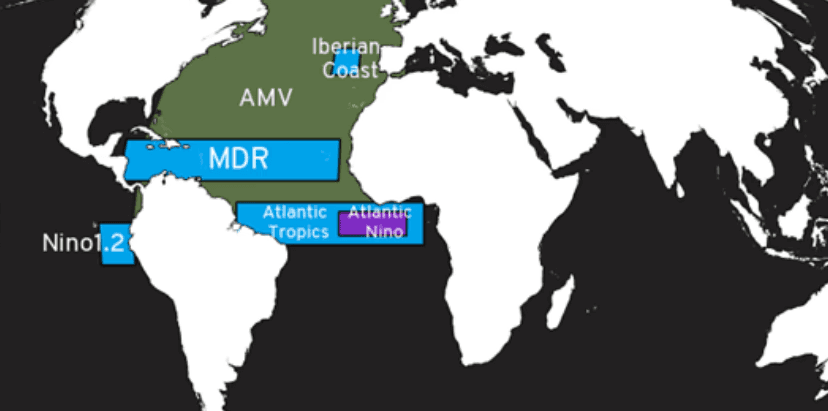
By learning from global teleconnection patterns, DeepCyc’s synthetic events remain sensitive to shifts in major climate drivers such as ENSO, AMO, or the Indian Ocean Dipole.
Terrain-corrected wind field model
To replicate the physical structure of storms, DeepCyc incorporates high-resolution boundary layer physics from Reask’s InCyc 1 km gust simulations.
The model estimates local 3-second gusts over actual terrain, correcting for roughness and topographic effects both at site and up to 3 km upwind, ensuring physically realistic wind fields across diverse landscapes.
So, you adjusted your model. Why 20%?
A fudge factor is not a methodology.
You knew the model needed adjusting. So you increased hurricane frequencies, say by 20%. Why 20%? Because adjusting down didn't feel right. Because you didn't want a step change. Because it felt conservative enough to defend.
But Florida and the Gulf Coast aren't experiencing the same climate response as the Northeast. A uniform frequency adjustment treats them identically.
After the next active season, someone will ask what that adjustment actually accounted for. You won't have a clean answer.

THE SOLUTION
A new type of cat model. One that knows the physics.
Reask's Unified Tropical Cyclone (UTC) model simulates millions of physically realistic storms from the conditions that produce them today: sea surface temperatures, wind shear, mean sea level pressure, and steering patterns.

DEEPCYC TRACKS
A climate-conditioned view of tropical cyclone risk
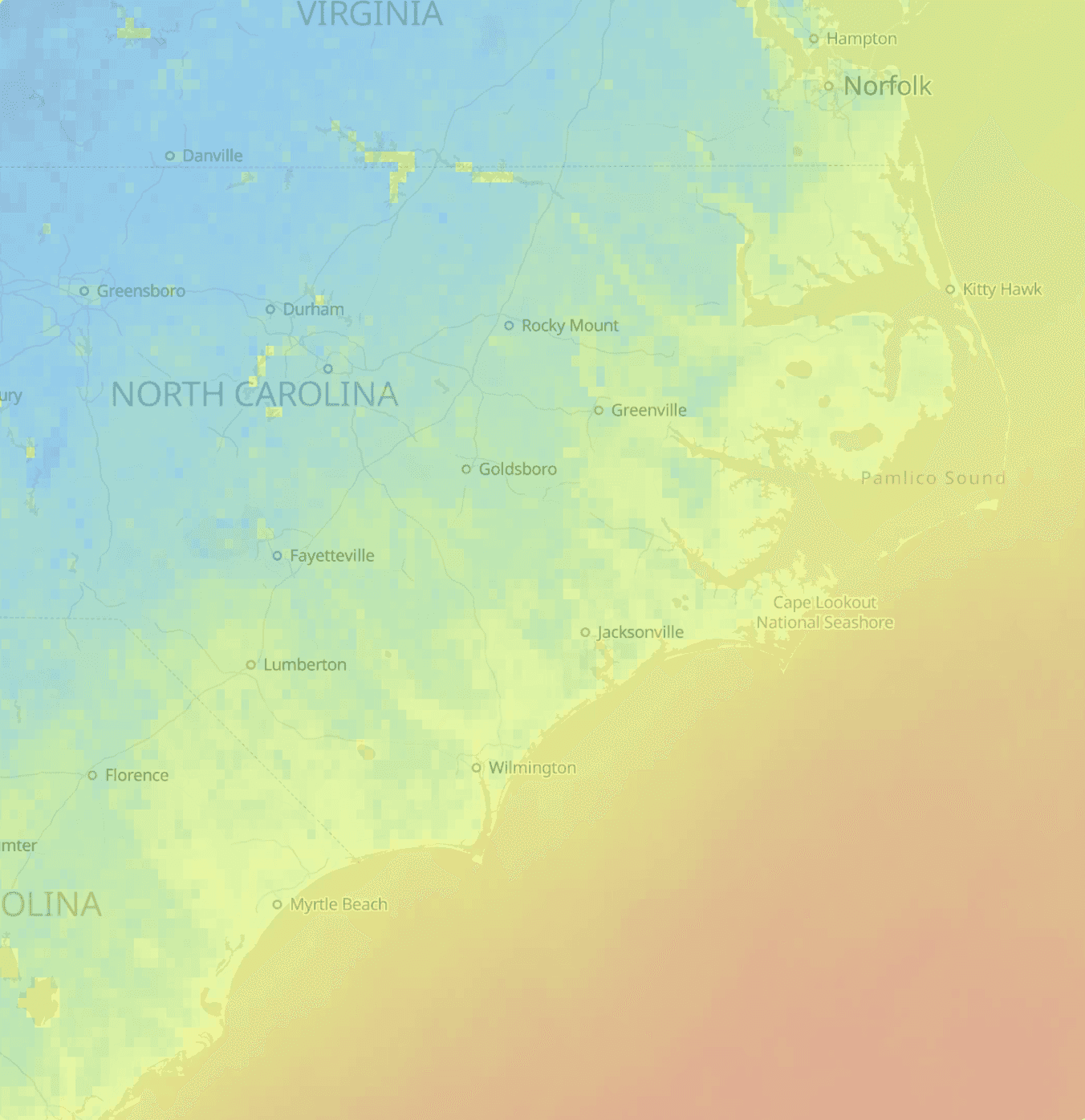
For every event generated by the UTC model, DeepCyc models the spatial wind field and surface interaction across all tropical cyclone basins, accounting for local terrain and topography to produce 3-second gusts at 1 km resolution.
Return period gust maps at 1 km
Connects all tropical cyclone basins into one consistent, climate-aware framework
Seasonal, present-day, and future climate views from 1.5°C to 3°C+
LiveCyc Scenarios
A climate-conditioned view of tropical cyclone risk
For every event generated by the UTC model, DeepCyc models the spatial wind field and surface interaction across all tropical cyclone basins, accounting for local terrain and topography to produce 3-second gusts at 1 km resolution.
Return period gust maps at 1 km
Connects all tropical cyclone basins into one consistent, climate-aware framework
Seasonal, present-day, and future climate views from 1.5°C to 3°C+
DEEPCYC TRACKS
A climate-conditioned view of tropical cyclone risk
For every event generated by the UTC model, DeepCyc models the spatial wind field and surface interaction across all tropical cyclone basins, accounting for local terrain and topography to produce 3-second gusts at 1 km resolution.
Return period gust maps at 1 km
Connects all tropical cyclone basins into one consistent, climate-aware framework
Seasonal, present-day, and future climate views from 1.5°C to 3°C+
CLIMATE-BASED RISK ADJUSTMENT
Integrate climate risk into your existing workflow
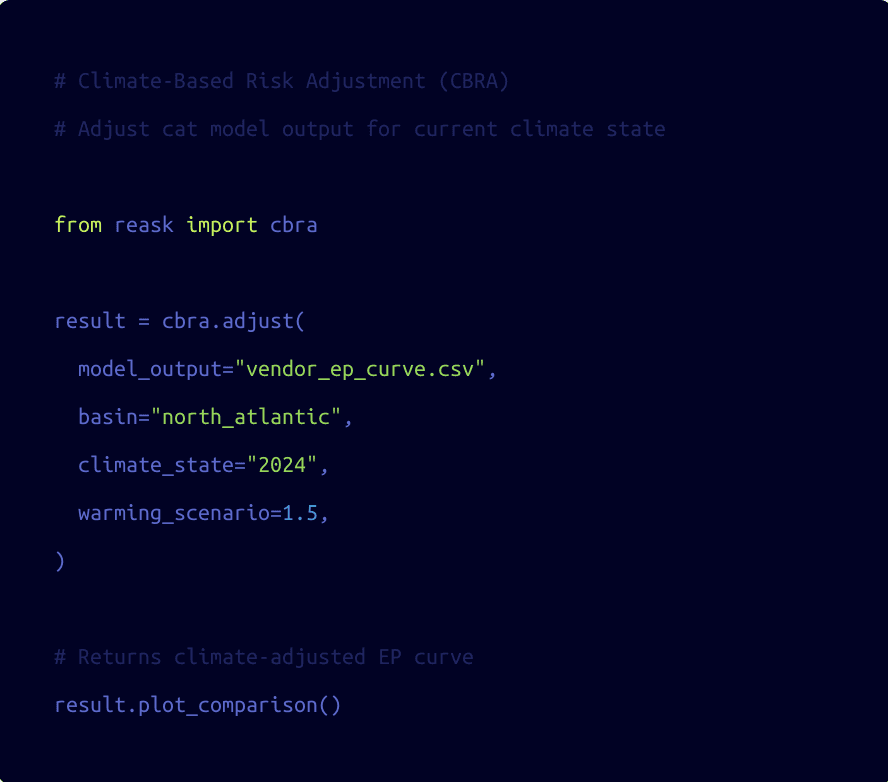
Reask's CBRA Python library adjusts your existing cat model output to make risk distributions climate-aware. No model replacement required.
Integrates with all standard cat model outputs
Global correlation explicit, all basins, one model
Updated as conditions change, not locked to a static historical window
CLIMATE-BASED RISK ADJUSTMENT
Integrate climate risk into your existing workflow
Reask's CBRA Python library adjusts your existing cat model output to make risk distributions climate-aware. No model replacement required.
Integrates with all standard cat model outputs
Global correlation explicit, all basins, one model
Updated as conditions change, not locked to a static historical window
CLIMATE-BASED RISK ADJUSTMENT
Integrate climate risk into your existing workflow
Reask's CBRA Python library adjusts your existing cat model output to make risk distributions climate-aware. No model replacement required.
Integrates with all standard cat model outputs
Global correlation explicit, all basins, one model
Updated as conditions change, not locked to a static historical window
How we decide what goes into our models
1
Track the latest academic research
Continuously monitor and contribute to emerging science to identify candidate processes that may drive tropical cyclone behaviour — and that are not yet represented in models.
1
Track the latest academic research
Continuously monitor and contribute to emerging science to identify candidate processes that may drive tropical cyclone behaviour — and that are not yet represented in models.
2
Design data features to represent the process
Translate physical hypotheses into quantifiable data features — the observable proxies that could carry a signal if the process is real.
2
Design data features to represent the process
Translate physical hypotheses into quantifiable data features — the observable proxies that could carry a signal if the process is real.
3
Let ML confirm or reject the signal
Apply machine learning to test whether the feature carries a statistically meaningful, data-emergent signal.
3
Let ML confirm or reject the signal
Apply machine learning to test whether the feature carries a statistically meaningful, data-emergent signal.
A defensible view of risk.
How risk leaders are putting climate-conditioned modelling to work.

A climate view without a rebuild

Peer-reviewed & benchmarked

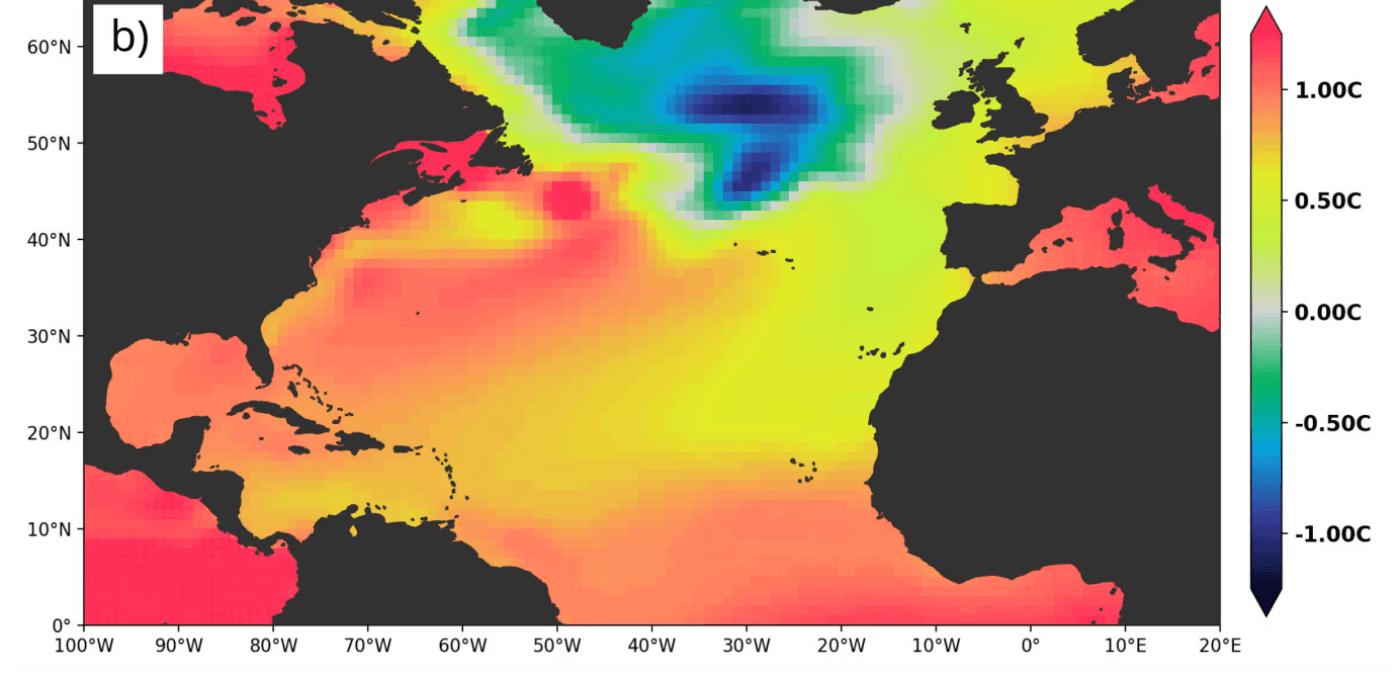
Conditioned to today's climate

Seasonal, present-day, and future views
Seeing the risk others miss
How risk leaders are putting climate-conditioned modelling to work.

"Published climate literature gave us basin-wide projections, but we needed regional landfall granularity we could feed directly into our event set. Reask's data let us isolate how warming shifts hurricane risk across 12 US coastal segments. That level of resolution simply wasn't available from other sources."

Sam Phibbs
Head of Catastrophe Research, MS Amlin

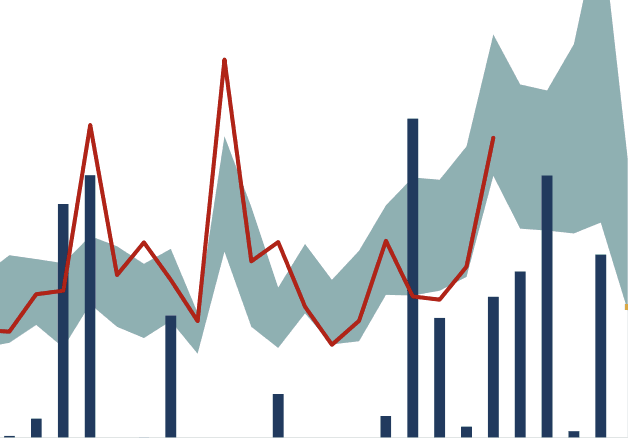
"Working with the Reask team on this paper gave us a way to quantify something the ILS market has long debated: whether seasonal climate forecasts are actually actionable for portfolio decisions. The 40-year back-test suggests they are, and by a meaningful margin."

Francesco Comola
Head of Analytics, LGT ILS Partners
Frequently asked questions
What risk teams ask before they start.
How do you adjust a catastrophe model for climate change?
Can I get a climate-conditioned view of risk without replacing my existing cat model?
What makes a climate-conditioned risk model defensible to boards and regulators?
How is a physics-based cat model different from a climate-adjusted legacy model?
How is uncertainty quantified in climate-conditioned risk modelling?
When the climate question comes, you'll have an answer.
A defensible, climate-conditioned view of risk. Without rebuilding anything you already have.
When the climate question comes, you'll have an answer.
A defensible, climate-conditioned view of risk. Without rebuilding anything you already have.



Stay in the loop
Sign up for the Reask newsletter for the latest climate science, model updates, and industry insights *
* By subscribing, you agree to receive the Reask newsletter. You can unsubscribe at any time. For more details, see our Privacy Policy.
2025 © Reask
All rights reserved
Stay in the loop
Sign up for the Reask newsletter for the latest climate science, model updates, and industry insights *
* By subscribing, you agree to receive the Reask newsletter. You can unsubscribe at any time. For more details, see our Privacy Policy.
2025 © Reask
All rights reserved
Stay in the loop
Sign up for the Reask newsletter for the latest climate science, model updates, and industry insights *
* By subscribing, you agree to receive the Reask newsletter. You can unsubscribe at any time. For more details, see our Privacy Policy.
2025 © Reask
All rights reserved